
Colorectal cancer is one of the leading challenges in public health today. It is the third most common cancer, following breast and lung cancer, and the second most common cause of cancer mortality. It affects men more frequently than women.
The highest incidence is observed between the ages of 60 and 75. However, a concerning trend is recently emerging: an increasing number of cases in individuals under 50, with an estimated annual rise of about 0.4%. In the United States, approximately 12% of new diagnoses occur in this younger population, particularly between 45 and 50 years of age.
Given these figures, it becomes essential to emphasize the importance of prevention, which remains the most effective strategy to reduce both the incidence and mortality of this disease.
Several risk factors were identified, many of which are modifiable. Lifestyle plays a crucial role: a diet high in fats and animal proteins and low in fibre, along with obesity and smoking, significantly increases the risk. Clinical factors such as advancing age, inflammatory bowel disease, and a personal history of previous colorectal cancer or colonic polyps also contribute. In addition, genetic and familial factors are important: hereditary syndromes such as Familial Adenomatous Polyposis and Lynch syndrome, as well as a family history of colorectal cancer, can increase the risk by two to three times.
One of the most challenging aspects of colorectal cancer is that it is often asymptomatic in its early stages. When symptoms appear, they are frequently non-specific and can be easily overlooked. These may include rectal bleeding (either visible or occult), fatigue, loss of appetite, unintentional weight loss, changes in bowel habits, and iron deficiency anaemia. For this reason, waiting for symptoms to develop is not a safe strategy—early action is essential.
This is where screening plays a pivotal role. Prevention programs are primarily based on a simple and non-invasive test, the Faecal Immunochemical Test (FIT), which detects hidden blood in the stool. If the test is positive, the next step is a colonoscopy, the gold standard diagnostic procedure. Colonoscopy not only allows for the detection of cancer but also enables the removal of precancerous lesions, such as polyps, thereby preventing the development of the disease.
Participate the screening programs means detect colorectal cancer at an early stage or even prevent it. Early diagnosis significantly improves treatment outcomes and reduces mortality.
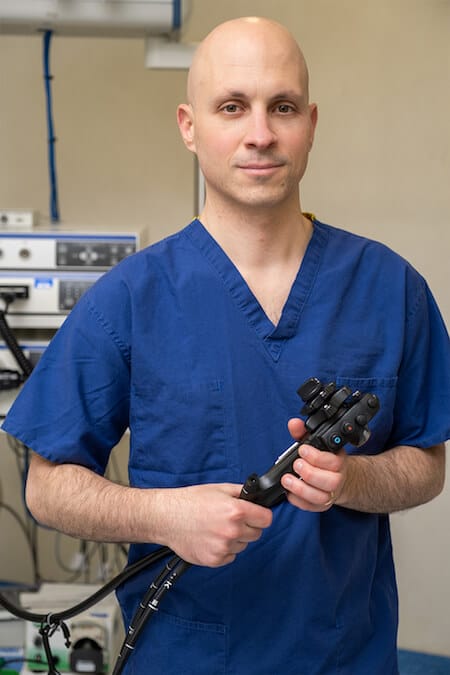
About the author: Dr Alberto Murino is a Consultant Gastroenterologist and Gastrointestinal Endoscopist at Royal Free Hospital NHS trust. His interests include endoscopy, colonoscopy, capsule endoscopy, double balloon enteroscopy, endoscopy dilatation, percutaneous endoscopic gastrostomy, endoscopic mucosal resection (EMR), endoscopic submucosal dissection (ESD) and general gastroenterology including irritable bowel syndrome, gastroesophageal reflux and gastrointestinal dysmotility disorders. To know more about Dr Murino, please click here.