Pancreatic cancer
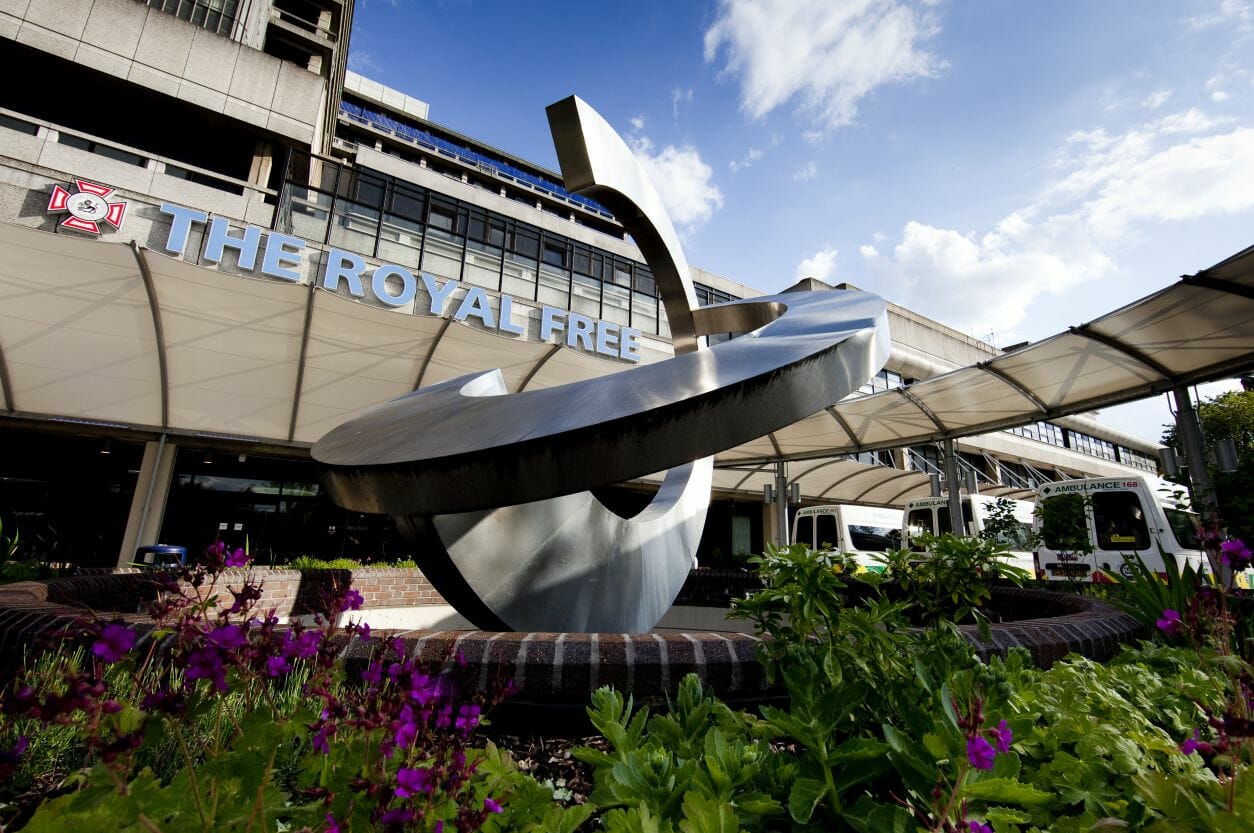
Our private Pancreatic cancer surgery service is provided at the Royal Free Hospital in Hampstead.
The hepatobiliary (HPB) unit at the Royal Free Hospital is recognised for caring for patients with advanced disease who cannot have surgery at other hospitals. It also has the highest two-year survival rate for pancreatic cancer in the country.
What is pancreatic cancer?
The pancreas is an organ located in the abdomen. Its main function is to help your body break down food and produce the hormone insulin. Cancer of the pancreas is a cancer that can develop in any part of the pancreas. It is a very serious form of cancer, which is both difficult to detect and to treat. Depending on your overall health and where the cancer starts, your consultant will advise the best treatment for you.
Symptoms
Pancreatic cancer often does not cause symptoms at first. Here are the most common symptoms people may have if they develop pancreatic cancer:
- the whites of your eyes or your skin turn yellow, which is called jaundice.
- you may also notice itchy skin, darker urine, and lighter-coloured stools than usual.
- loss of appetite or losing weight without trying.
- feeling tired or having low energy.
- having a high temperature, or feeling hot, cold, or shivery.
You might be more likely to get this cancer if you:
- are over the age of 65
- have some health problems, like long-term inflammation of the pancreas, such as chronic pancreatitis
- have a family history of pancreatic cancer
- have certain habits or ways of living that can increase your risk of getting pancreatic cancer.
It’s important to get any symptoms of pancreatic cancer checked by a GP, even if you do not think you have a higher chance of getting it.
Source: NHS England
How is pancreatic cancer diagnosed?
Your GP can check your symptoms and might refer you to a specialist. To find out if you have pancreatic cancer, you will need some tests and scans, such as:
- blood tests
- scans, such as ultrasound, CT, PET, or MRI
- you might also need a biopsy. This is when a small sample of cells is taken from your pancreas.
- ERCP (Endoscopic Retrograde Cholangiopancreatography) – a procedure where a thin tube is passed through your mouth to your stomach, and X-rays are taken of your pancreas.
Finding cancer early gives you the best possible chance for successful treatment and recovery.
If you are concerned about pancreatic cancer and would like to see a private specialist, please contact our team for help at rf-tr.privateenquiries@nhs.net.
Contact us Monday to Friday, 8am - 6pm:
Booking line: +44 (0) 20 4527 2993
Treatments for pancreatic cancer
Pancreatic cancer can be difficult to treat. The treatment you have will depend on:
- the size of the tumour
- type of pancreatic cancer (such as exocrine pancreatic cancers or pancreatic neuroendocrine tumours)
- where it is
- if it has spread (cancer metastasis)
- your overall general health
We frequently provide multimodal treatment, including chemotherapy, radiotherapy, and surgery, to patients with pancreatic cancer.
Your consultant will discuss a treatment plan that will best suit your medical condition.
Surgery to remove resectable pancreatic cancer
A resectable cancer means that the tumour can be fully removed by a surgery.
- Whipple procedure – If your consultant recommends surgery, the Whipple procedure is the most commonly used and effective surgery for many patients. A specialist hepato-pancreato-biliary (HPB) surgeon performs this procedure. The surgery may remove part or all of the pancreas, and in rare cases, parts of nearby organs as well. If your test results show that the Whipple procedure is your best option for removing pancreatic cancer, your care team may suggest it.
Recovery after pancreatic cancer surgery can take time. Your specialist team will discuss the benefits and possible side effects with you.
- Distal pancreatectomy – In a distal pancreatectomy, whether open or laparoscopic, the surgeon removes the left half of the pancreas, including the body and tail. This part is farthest from the duodenum, the first section of the small bowel, and the head of the pancreas is left in place. Since the spleen is very close to the tail of the pancreas, it is often removed along with the pancreas. In some cases of pancreatic cancer, the entire pancreas may need to be removed. This procedure is called a total pancreatectomy.
Minimally invasive robotic surgery
Minimally invasive robotic surgery is a type of surgical technique. At the Royal Free Hospital, this approach has been used successfully for kidney and bowel operations. The Royal Free Hospital is also the largest robotic renal centre in Europe.
The hospital is developing a similar robotic program for pancreatic surgery, which may be suitable for some cancer patients. We expect that robotic surgery will lower the need for intensive care after surgery and help patients leave the hospital sooner, without affecting surgical results. Learn more about robotic surgery.
Treatment for unresectable or non-surgical pancreatic cancer
If surgery is not possible, you may be offered one or more of the following cancer treatments.
- Radiofrequency or microwave ablation uses microwaves or radio waves to heat the tumour. This process kills cancer cells and helps shrink the tumour.
- Stereotactic body radiotherapy (SBRT) is a type of radiotherapy that uses high-dose radiation beams to precisely target the tumour. This helps kill cancer cells while protecting nearby healthy tissue.
- Chemotherapy uses strong medications to kill cancer cells. It may be recommended if the cancer has spread to other parts of your body, which is called metastasis. It is possible that after a surgery, you may be advised to undergo chemotherapy to ensure all cancer cells have been removed.
- Immunotherapy uses antibodies to help your body fight cancer cells more effectively. This treatment is often used for advanced cancer or when other options are not possible.
Consultations
Consultation is a key part of the patient journey and it is our goal to provide tailored treatment plans that best suit your individual needs. We are committed to ensuring all patients feel fully informed about what a procedure entails and any associated risks and supporting you in making the right decision for you.
If you are concerned about pancreatic cancer and would like to see a private specialist, please contact our team for help at rf-tr.privateenquiries@nhs.net.
Why choose Royal Free London Private Patients Unit?
The HPB unit at the Royal Free Hospital is recognised for caring for patients with advanced disease who cannot have surgery at other hospitals. It also has the highest two-year survival rate for pancreatic cancer in the country.
We provide seamless, multidisciplinary care from expert medical and clinical oncologists, experienced HPB surgeons, PB endoscopists, anaesthetists, theatre staff and interventional radiologists who are at the forefront of current approaches and novel treatment options in one of the UK’s most experienced centres.
You will also benefit from:
- The largest pancreatic cancer network in the country. Our HCC (hepatocellular carcinoma) service and NET (neuroendocrine tumour unit) have also been recognised as a European Centre of Excellence.
- Our fast-track Whipple pathway helps patients move from their first appointment to treatment within two weeks.
- You will have access to a wide range of oncology trials, giving you all possible treatment options.
- Our team specialises in complex surgery and often gives second opinions for cases that are borderline resectable or locally advanced.
Meet our consultants
We work with leading experts who are all supported by the expertise of a multidisciplinary team. Our specialist team of doctors and surgeons includes:




Royal Free Hospital, Hampstead
The Private Patients Unit at the Royal Free Hospital is part of the NHS and is wholly owned by the Royal Free London NHS Foundation Trust.
We offer you access to some of London’s most experienced specialists, all of whom work as NHS consultants at our facilities.